
01 — Aesthetic Medicine
Scars come in two opposite kinds, and they need opposite treatments. We use seven tools between them, matched to what your scar actually is — all of it doctor-led.
Depressed & raised
Seven, combined
Our doctors
€190
Overview
Almost every conversation about scars goes wrong at the start, because people say “scar” as though it were one thing. It is two, and they are opposites.
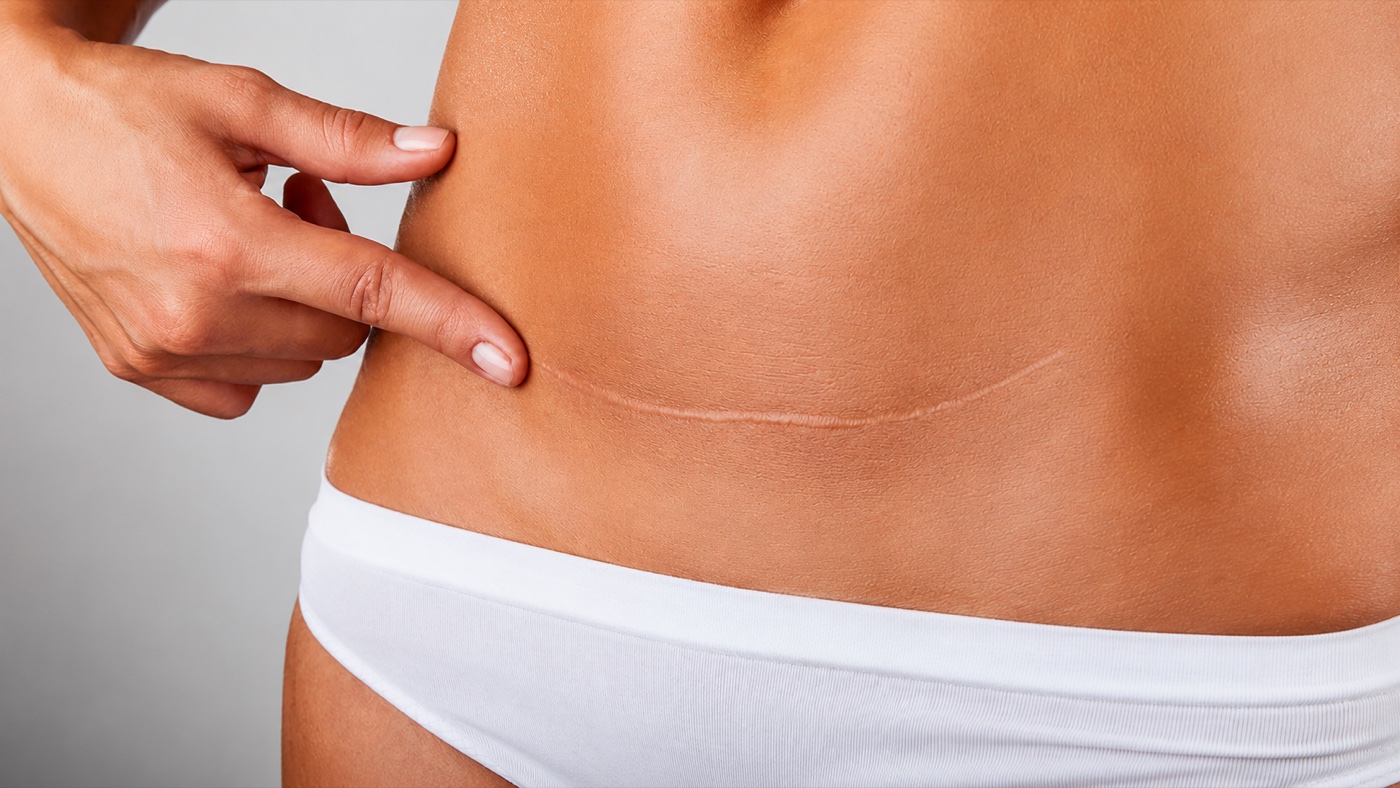
The skin has sunk. Usually three things at once: fibrous strands underneath pulling it down like a tent peg, volume that has gone, and texture on the surface that has changed. Typical of acne, chickenpox and some surgical scars. The job is to release, rebuild and resurface.
The opposite: the body overproduced collagen while healing and the scar sits proud of the skin — hypertrophic, or a keloid if it has grown beyond the original wound. Common on the chest, shoulders and ears, and more common in some skin types than others. The job is to calm it down and flatten it.
Treating one as though it were the other does nothing at best. Which is why the first appointment is an assessment, and why it is free.
Depressed scars
For a sunken scar the sequence matters more than any single treatment. Resurfacing alone smooths the top but leaves the tether, so the scar gets pulled back down. Filling alone puts volume into a space that is still anchored. Releasing alone leaves an open space that can simply re-tether as it heals.
So we work in three stages, and not every scar needs all of them:
Method
The step most clinics skip, and often the one that makes the difference. A fine needle or cannula is passed beneath the scar to cut the fibrous bands anchoring it to the deeper tissue. Once released, the scar can lift instead of being held down.
We use subcision for cellulite dimpling too — the same mechanical problem in a different place. See Cellulite Treatments.
Method
Once a scar is released there is a space, and something has to fill it. We have two ways of doing that and they are genuinely different — your doctor picks according to your scar and your timeframe.
A biostimulator rather than a filler. It does not fill the scar — it prompts your own skin to build new collagen there, gradually, over the following months. The volume that returns is yours.
Immediate volume, placed directly under the scar. You see the result the same day, and it lasts months rather than years.
See Collagen Stimulators and Dermal Fillers.
Method
Volume is not the whole story. Scar tissue is different tissue — poorer quality, less elastic, worse blood supply than the skin around it. This works on that rather than on shape.
Purified DNA fragments that stimulate fibroblasts — the cells that build and organise collagen. They improve the quality and elasticity of the tissue itself rather than adding to it.
See Polynucleotides.
Method
Our most powerful device, and where it makes the biggest difference of anything we do. It removes microscopic columns of damaged skin and leaves healthy tissue between them, so the area heals fast and rebuilds with new collagen — softening scar edges and evening out the texture on top.
Raised scars
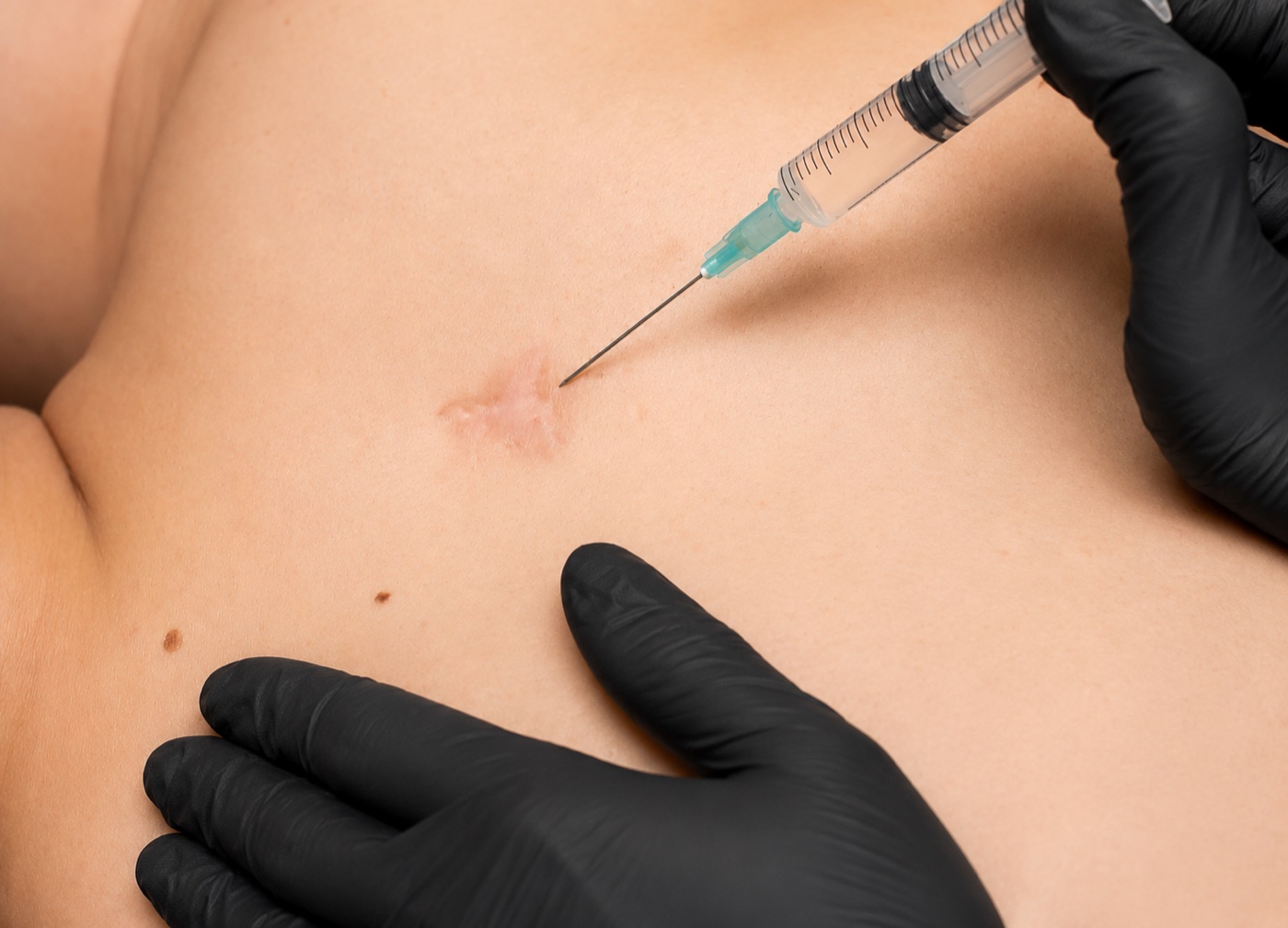
A hypertrophic scar or a keloid is not a scar that needs filling. It is a scar where the body did too much: it kept producing collagen after the wound had closed, and the result sits raised, often red, sometimes itchy or uncomfortable.
The mainstay for raised scars, and a genuinely medical treatment rather than a cosmetic one. A corticosteroid is injected directly into the scar to reduce the inflammation and slow the collagen overproduction that is keeping it raised. The scar softens and flattens over a series of sessions spaced weeks apart.
Where a raised scar has settled but the texture still bothers you, CO₂ laser may follow. Keloids in particular need care — they can be provoked by the wrong treatment, which is exactly why this is assessed by a doctor before anything is done.
Your plan
Seven tools, and almost nobody needs all seven. What you need depends on which kind of scar you have, how old it is, how deep it goes and whether it is tethered.
Scars can usually be improved substantially. They cannot always be erased, and anyone promising you that is not being straight with you. Your doctor will tell you what is realistic for your specific scarring before you spend anything.
FAQ
Which product your doctor chooses depends on your scar. We work with other certified products authorised in Spain that are not listed here — if you have a specific one in mind, just ask.
Poly-L-lactic acid — Sculptra®, Lanluma®
Hyaluronic acid — Juvéderm®, Restylane®, Belotero®
Polynucleotides — Plinest®, PhilArt®, Nucleofill®
The corticosteroid used for raised scars is a prescription medicine. Spanish law does not permit clinics to name prescription medicines in public advertising, so your doctor will tell you exactly which one they recommend, and why, at your consultation.
Related
Next Step
Bring your scars to a doctor who will tell you which kind you have, what can honestly be improved, and what it would actually take.
Get in Touch
Av. España No. 2
29680 Estepona, Málaga